
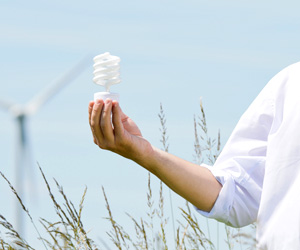
 Green solar energy is one of the most important developments in the quest to replace fossil fuels with energy from sources which will never run out. The sun is constantly giving out energy, even in parts of the world which experience heavy cloud cover and low temperatures for much of the year, and this energy can be harnessed to produce electricity. It is possible that the entire energy needs of the globe could be met from solar power alone, although there are other technologies which also have the capability of producing much of the world’s energy needs.
It is possible for solar energy to be used in two different ways. It can either be used in small scale production, with the individual home or business producing its own fuel, or it can be used in larger scale commercial operations. The problem which both of these models face is that current solar technology is not efficient enough to be cost effective. Less than a fifth of the sunlight which hits the photovoltaic panels is currently converted to electricity, and this is not a high enough ratio for the model to be sustainable. Research is continuing to produce more effective panels.
Areas which experience high levels of sunlight and warm temperatures are ideal for the construction of solar installations, and the potential for large scale solar generation of electricity remains real. As of now, such projects are only possible with subsidy from government sources, as the electricity generated by such an installation would be far more expensive than that produced by nuclear fission or fossil fuels. Environmental impact is also a factor in determining whether or not a large scale solar operation would be feasible. It is more than likely that countries with large desert areas will one day use such large scale installations.
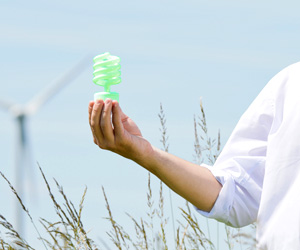 The use of green solar energy in the home is already beginning, and the potential exists for this to grow into a huge market. There are literally millions of homes worldwide which have a roof that faces the sun, and which could therefore generate at least a part of their electricity needs. There are ways to make the photovoltaic panels look aesthetic, and to have them blend in with the rest of the design of the house. In the current market subsidies are needed to make this cost effective, but this could change with the introduction of more effective solar panels.
It is the lack of efficiency of the panels which is holding back the development of solar energy in all its forms. This may be about to change, as it has been reported that a small American company has just managed to develop a photovoltaic panel which traps more than twice as much sunlight as those currently in use. This development could potentially alter the economic incentives, and make it far more realistic to develop solar installations on all levels. The potential savings which could be made by closing down non-renewable stations could then finance further development.
The potential for green solar energy to change the way we live is very real, and there are signs that this potential is about to be realized. The barrier of inefficiency will continue to be broken down by improving technology, and when solar electricity generation reaches a sensible plateau of development, the commercial incentives will be there for everyone to use without the need for subsidies. Countries such as Australia and the United States, which have significant land mass in high temperature regions, could generate virtually all of their energy needs from this improved green solar energy.